whalt is salt but first/gift it a free name after sining the cosine a few tangents to the vector
$2000 I who am not capable of understanding how to do these complicated things for free will be better served by paying 2000 now as opposed to 3000 later when the gum is stuck to the bottom of the chair and the gym membership sits gathering a spare tire

When I was very young definition wat the word in the dictioniary defining define
now the re is a new one
Discretization

In applied mathematics, discretization is the process of transferring continuous functions, models, variables, and equations into discrete counterparts. This process is usually carried out as a first step toward making them suitable for numerical evaluation and implementation on digital computers. Dichotomization is the special case of discretization in which the number of discrete classes is 2, which can approximate a continuous variable as a binary variable (creating a dichotomy for modeling purposes, as in binary classification).
Discretization is also related to discrete mathematics, and is an important component of granular computing. In this context, discretization may also refer to modification of variable or category granularity, as when multiple discrete variables are aggregated or multiple discrete categories fused.
Whenever continuous data is discretized, there is always some amount of discretization error. The goal is to reduce the amount to a level considered negligible for the modeling purposes at hand.
The terms discretization and quantization often have the same denotation but not always identical connotations. (Specifically, the two terms share a semantic field.) The same is true of discretization error and quantization error.
Mathematical methods relating to discretization include the Euler–Maruyama method and the zero-order hold.(a thermodynamic system), throughout which all physical properties of a material are essentially uniform.[1][2]: 86 [3]: 3 Examples of physical properties include density, index of refraction, magnetization and chemical composition. A simple description is that a phase is a region of material that is chemically uniform, physically distinct, and (often) mechanically separable. In a system consisting of ice and water in a glass jar, the ice cubes are one phase, the water is a second phase, and the humid air is a third phase over the ice and water. The glass of the jar is another separate phase. (See state of matter § Glass)Phasor

In physics and engineering, a phasor (a portmanteau of phase vector[1][2]) is a complex number representing a sinusoidal function whose amplitude (A), angular frequency (ω), and initial phase (θ) are time-invariant. It is related to a more general concept called analytic representation,[3] which decomposes a sinusoid into the product of a complex constant and a factor depending on time and frequency. The complex constant, which depends on amplitude and phase, is known as a phasor, or complex amplitude,[4][5] and (in older texts) sinor[6] or even complexor.[6]
A common situation in electrical networks powered by time varying current is the existence of multiple sinusoids all with the same frequency, but different amplitudes and phases. The only difference in their analytic representations is the complex amplitude (phasor). A linear combination of such functions can be represented as a linear combination of phasors (known as phasor arithmetic or phasor algebra[7]: 53 ) and the time/frequency dependent factor that they all have in common.
The origin of the term phasor rightfully suggests that a (diagrammatic) calculus somewhat similar to that possible for vectors is possible for phasors as well.[6] An important additional feature of the phasor transform is that differentiation and integration of sinusoidal signals (having constant amplitude, period and phase) corresponds to simple algebraic operations on the phasors; the phasor transform thus allows the analysis (calculation) of the AC steady state of RLC circuits by solving simple algebraic equations (albeit with complex coefficients) in the phasor domain instead of solving differential equations (with real coefficients) in the time domain.[8][9][a] The originator of the phasor transform was Charles Proteus Steinmetz working at General Electric in the late 19th century.[10][11]
Glossing over some mathematical details, the phasor transform can also be seen as a particular case of the Laplace transform, which additionally can be used to (simultaneously) derive the transient response of an RLC circuit.[9][11] However, the Laplace transform is mathematically more difficult to apply and the effort may be unjustified if only steady state analysis is required.[11]


Notation[edit source]
Phasor notation (also known as angle notation) is a mathematical notation used in electronics engineering and electrical engineering. can represent either the vector or the complex number , with , both of which have magnitudes of 1. A vector whose polar coordinates are magnitude and angle is written [12]





The angle may be stated in degrees with an implied conversion from degrees to radians. For example would be assumed to be which is the vector or the number


The term phase is sometimes used as a synonym for state of matter, but there can be several immiscible phases of the same state of matter. Also, the term phase is sometimes used to refer to a set of equilibrium states demarcated in terms of state variables such as pressure and temperature by a phase boundary on a phase diagram. Because phase boundaries relate to changes in the organization of matter, such as a change from liquid to solid or a more subtle change from one crystal structure to another, this latter usage is similar to the use of "phase" as a synonym for state of matter. However, the state of matter and phase diagram usages are not commensurate with the formal definition given above and the intended meaning must be determined in part from the context in which the term is used.

Types of phases[edit source]

Distinct phases may be described as different states of matter such as gas, liquid, solid, plasma or Bose–Einstein condensate. Useful mesophases between solid and liquid form other states of matter.
Distinct phases may also exist within a given state of matter. As shown in the diagram for iron alloys, several phases exist for both the solid and liquid states. Phases may also be differentiated based on solubility as in polar (hydrophilic) or non-polar (hydrophobic). A mixture of water (a polar liquid) and oil (a non-polar liquid) will spontaneously separate into two phases. Water has a very low solubility (is insoluble) in oil, and oil has a low solubility in water. Solubility is the maximum amount of a solute that can dissolve in a solvent before the solute ceases to dissolve and remains in a separate phase. A mixture can separate into more than two liquid phases and the concept of phase separation extends to solids, i.e., solids can form solid solutions or crystallize into distinct crystal phases. Metal pairs that are mutually soluble can form alloys, whereas metal pairs that are mutually insoluble cannot.
As many as eight immiscible liquid phases have been observed.[a] Mutually immiscible liquid phases are formed from water (aqueous phase), hydrophobic organic solvents, perfluorocarbons (fluorous phase), silicones, several different metals, and also from molten phosphorus. Not all organic solvents are completely miscible, e.g. a mixture of ethylene glycol and toluene may separate into two distinct organic phases.[b]
Phases do not need to macroscopically separate spontaneously. Emulsions and colloids are examples of immiscible phase pair combinations that do not physically separate.
Phase equilibrium[edit source]
Left to equilibration, many compositions will form a uniform single phase, but depending on the temperature and pressure even a single substance may separate into two or more distinct phases. Within each phase, the properties are uniform but between the two phases properties differ.
Water in a closed jar with an air space over it forms a two-phase system. Most of the water is in the liquid phase, where it is held by the mutual attraction of water molecules. Even at equilibrium molecules are constantly in motion and, once in a while, a molecule in the liquid phase gains enough kinetic energy to break away from the liquid phase and enter the gas phase. Likewise, every once in a while a vapor molecule collides with the liquid surface and condenses into the liquid. At equilibrium, evaporation and condensation processes exactly balance and there is no net change in the volume of either phase.
At room temperature and pressure, the water jar reaches equilibrium when the air over the water has a humidity of about 3%. This percentage increases as the temperature goes up. At 100 °C and atmospheric pressure, equilibrium is not reached until the air is 100% water. If the liquid is heated a little over 100 °C, the transition from liquid to gas will occur not only at the surface but throughout the liquid volume: the water boils.
Number of phases[edit source]

For a given composition, only certain phases are possible at a given temperature and pressure. The number and type of phases that will form is hard to predict and is usually determined by experiment. The results of such experiments can be plotted in phase diagrams.
The phase diagram shown here is for a single component system. In this simple system, phases that are possible, depends only on pressure and temperature. The markings show points where two or more phases can co-exist in equilibrium. At temperatures and pressures away from the markings, there will be only one phase at equilibrium.
In the diagram, the blue line marking the boundary between liquid and gas does not continue indefinitely, but terminates at a point called the critical point. As the temperature and pressure approach the critical point, the properties of the liquid and gas become progressively more similar. At the critical point, the liquid and gas become indistinguishable. Above the critical point, there are no longer separate liquid and gas phases: there is only a generic fluid phase referred to as a supercritical fluid. In water, the critical point occurs at around 647 K (374 °C or 705 °F) and 22.064 MPa.
An unusual feature of the water phase diagram is that the solid–liquid phase line (illustrated by the dotted green line) has a negative slope. For most substances, the slope is positive as exemplified by the dark green line. This unusual feature of water is related to ice having a lower density than liquid water. Increasing the pressure drives the water into the higher density phase, which causes melting.
Another interesting though not unusual feature of the phase diagram is the point where the solid–liquid phase line meets the liquid–gas phase line. The intersection is referred to as the triple point. At the triple point, all three phases can coexist.
Experimentally, the phase lines are relatively easy to map due to the interdependence of temperature and pressure that develops when multiple phases forms. See Gibbs' phase rule. Consider a test apparatus consisting of a closed and well insulated cylinder equipped with a piston. By controlling the temperature and the pressure, the system can be brought to any point on the phase diagram. From a point in the solid stability region (left side of diagram), increasing the temperature of the system would bring it into the region where a liquid or a gas is the equilibrium phase (depending on the pressure). If the piston is slowly lowered, the system will trace a curve of increasing temperature and pressure within the gas region of the phase diagram. At the point where gas begins to condense to liquid, the direction of the temperature and pressure curve will abruptly change to trace along the phase line until all of the water has condensed.
Interfacial phenomena[edit source]
Between two phases in equilibrium there is a narrow region where the properties are not that of either phase. Although this region may be very thin, it can have significant and easily observable effects, such as causing a liquid to exhibit surface tension. In mixtures, some components may preferentially move toward the interface. In terms of modeling, describing, or understanding the behavior of a particular system, it may be efficacious to treat the interfacial region as a separate phase.
Crystal phases[edit source]
A single material may have several distinct solid states capable of forming separate phases. Water is a well-known example of such a material. For example, water ice is ordinarily found in the hexagonal form ice Ih, but can also exist as the cubic ice Ic, the rhombohedral ice II, and many other forms. Polymorphism is the ability of a solid to exist in more than one crystal form. For pure chemical elements, polymorphism is known as allotropy. For example, diamond, graphite, and fullerenes are different allotropes of carbon.
Phase transitions[edit source]
When a substance undergoes a phase transition (changes from one state of matter to another) it usually either takes up or releases energy. For example, when water evaporates, the increase in kinetic energy as the evaporating molecules escape the attractive forces of the liquid is reflected in a decrease in temperature. The energy required to induce the phase transition is taken from the internal thermal energy of the water, which cools the liquid to a lower temperature; hence evaporation is useful for cooling. See Enthalpy of vaporization. The reverse process, condensation, releases heat. The heat energy, or enthalpy, associated with a solid to liquid transition is the enthalpy of fusion and that associated with a solid to gas transition is the enthalpy of sublimation.
Phases out of equilibrium[edit source]
While phases of matter are traditionally defined for systems in thermal equilibrium, work on quantum many-body localized (MBL) systems has provided a framework for defining phases out of equilibrium. MBL phases never reach thermal equilibrium, and can allow for new forms of order disallowed in equilibrium via a phenomenon known as localization protected quantum order. The transitions between different MBL phases and between MBL and thermalizing phases are novel dynamical phase transitions whose properties are active areas of research.
State of matter


In physics, a state of matter is one of the distinct forms in which matter can exist. Four states of matter are observable in everyday life: solid, liquid, gas, and plasma. Many intermediate states are known to exist, such as liquid crystal, and some states only exist under extreme conditions, such as Bose–Einstein condensates, neutron-degenerate matter, and quark–gluon plasma, which only occur, respectively, in situations of extreme cold, extreme density, and extremely high energy. For a complete list of all exotic states of matter, see the list of states of matter.
Historically, the distinction is made based on qualitative differences in properties. Matter in the solid state maintains a fixed volume and shape, with component particles (atoms, molecules or ions) close together and fixed into place. Matter in the liquid state maintains a fixed volume, but has a variable shape that adapts to fit its container. Its particles are still close together but move freely. Matter in the gaseous state has both variable volume and shape, adapting both to fit its container. Its particles are neither close together nor fixed in place. Matter in the plasma state has variable volume and shape, and contains neutral atoms as well as a significant number of ions and electrons, both of which can move around freely.
The term "phase" is sometimes used as a synonym for state of matter, but it is possible for a single compound to form different phases that are in the same state of matter. For example, ice is the solid state of water, but there are multiple phases of ice with different crystal structures, which are formed at different pressures and temperatures.
Four fundamental states
Solid

In a solid, constituent particles (ions, atoms, or molecules) are closely packed together. The forces between particles are so strong that the particles cannot move freely but can only vibrate. As a result, a solid has a stable, definite shape, and a definite volume. Solids can only change their shape by an outside force, as when broken or cut.
In crystalline solids, the particles (atoms, molecules, or ions) are packed in a regularly ordered, repeating pattern. There are various different crystal structures, and the same substance can have more than one structure (or solid phase). For example, iron has a body-centred cubic structure at temperatures below 912 °C (1,674 °F), and a face-centred cubic structure between 912 and 1,394 °C (2,541 °F). Ice has fifteen known crystal structures, or fifteen solid phases, which exist at various temperatures and pressures.[1]
Glasses and other non-crystalline, amorphous solids without long-range order are not thermal equilibrium ground states; therefore they are described below as nonclassical states of matter.
Solids can be transformed into liquids by melting, and liquids can be transformed into solids by freezing. Solids can also change directly into gases through the process of sublimation, and gases can likewise change directly into solids through deposition.
Liquid

A liquid is a nearly incompressible fluid that conforms to the shape of its container but retains a (nearly) constant volume independent of pressure. The volume is definite if the temperature and pressure are constant. When a solid is heated above its melting point, it becomes liquid, given that the pressure is higher than the triple point of the substance. Intermolecular (or interatomic or interionic) forces are still important, but the molecules have enough energy to move relative to each other and the structure is mobile. This means that the shape of a liquid is not definite but is determined by its container. The volume is usually greater than that of the corresponding solid, the best known exception being water, H2O. The highest temperature at which a given liquid can exist is its critical temperature.[2]
Gas

A gas is a compressible fluid. Not only will a gas conform to the shape of its container but it will also expand to fill the container.
In a gas, the molecules have enough kinetic energy so that the effect of intermolecular forces is small (or zero for an ideal gas), and the typical distance between neighboring molecules is much greater than the molecular size. A gas has no definite shape or volume, but occupies the entire container in which it is confined. A liquid may be converted to a gas by heating at constant pressure to the boiling point, or else by reducing the pressure at constant temperature.
At temperatures below its critical temperature, a gas is also called a vapor, and can be liquefied by compression alone without cooling. A vapor can exist in equilibrium with a liquid (or solid), in which case the gas pressure equals the vapor pressure of the liquid (or solid).
A supercritical fluid (SCF) is a gas whose temperature and pressure are above the critical temperature and critical pressure respectively. In this state, the distinction between liquid and gas disappears. A supercritical fluid has the physical properties of a gas, but its high density confers solvent properties in some cases, which leads to useful applications. For example, supercritical carbon dioxide is used to extract caffeine in the manufacture of decaffeinated coffee.[3]
Plasma
.jpg)
Like a gas, plasma does not have definite shape or volume. Unlike gases, plasmas are electrically conductive, produce magnetic fields and electric currents, and respond strongly to electromagnetic forces. Positively charged nuclei swim in a "sea" of freely-moving disassociated electrons, similar to the way such charges exist in conductive metal, where this electron "sea" allows matter in the plasma state to conduct electricity.
A gas is usually converted to a plasma in one of two ways, either from a huge voltage difference between two points, or by exposing it to extremely high temperatures. Heating matter to high temperatures causes electrons to leave the atoms, resulting in the presence of free electrons. This creates a so-called partially ionised plasma. At very high temperatures, such as those present in stars, it is assumed that essentially all electrons are "free", and that a very high-energy plasma is essentially bare nuclei swimming in a sea of electrons. This forms the so-called fully ionised plasma.
The plasma state is often misunderstood, and although not freely existing under normal conditions on Earth, it is quite commonly generated by either lightning, electric sparks, fluorescent lights, neon lights or in plasma televisions. The Sun's corona, some types of flame, and stars are all examples of illuminated matter in the plasma state.
Phase transitions

A state of matter is also characterized by phase transitions. A phase transition indicates a change in structure and can be recognized by an abrupt change in properties. A distinct state of matter can be defined as any set of states distinguished from any other set of states by a phase transition. Water can be said to have several distinct solid states.[4] The appearance of superconductivity is associated with a phase transition, so there are superconductive states. Likewise, ferromagnetic states are demarcated by phase transitions and have distinctive properties. When the change of state occurs in stages the intermediate steps are called mesophases. Such phases have been exploited by the introduction of liquid crystal technology.[5][6]
The state or phase of a given set of matter can change depending on pressure and temperature conditions, transitioning to other phases as these conditions change to favor their existence; for example, solid transitions to liquid with an increase in temperature. Near absolute zero, a substance exists as a solid. As heat is added to this substance it melts into a liquid at its melting point, boils into a gas at its boiling point, and if heated high enough would enter a plasma state in which the electrons are so energized that they leave their parent atoms.
Forms of matter that are not composed of molecules and are organized by different forces can also be considered different states of matter. Superfluids (like Fermionic condensate) and the quark–gluon plasma are examples.
In a chemical equation, the state of matter of the chemicals may be shown as (s) for solid, (l) for liquid, and (g) for gas. An aqueous solution is denoted (aq). Matter in the plasma state is seldom used (if at all) in chemical equations, so there is no standard symbol to denote it. In the rare equations that plasma is used it is symbolized as (p).
Non-classical states
States

Quantities of atoms are found in different states of matter that depend on the physical conditions, such as temperature and pressure. By varying the conditions, materials can transition between solids, liquids, gases and plasmas.[107] Within a state, a material can also exist in different allotropes. An example of this is solid carbon, which can exist as graphite or diamond.[108] Gaseous allotropes exist as well, such as dioxygen and ozone.
At temperatures close to absolute zero, atoms can form a Bose–Einstein condensate, at which point quantum mechanical effects, which are normally only observed at the atomic scale, become apparent on a macroscopic scale.[109][110] This super-cooled collection of atoms then behaves as a single super atom, which may allow fundamental checks of quantum mechanical behavior.[111]
The Schrödinger model
The Stern–Gerlach experiment of 1922 provided further evidence of the quantum nature of atomic properties. When a beam of silver atoms was passed through a specially shaped magnetic field, the beam was split in a way correlated with the direction of an atom's angular momentum, or spin. As this spin direction is initially random, the beam would be expected to deflect in a random direction. Instead, the beam was split into two directional components, corresponding to the atomic spin being oriented up or down with respect to the magnetic field.[27]
In 1925, Werner Heisenberg published the first consistent mathematical formulation of quantum mechanics (matrix mechanics).[23] One year earlier, Louis de Broglie had proposed the de Broglie hypothesis: that all particles behave like waves to some extent,[28] and in 1926 Erwin Schrödinger used this idea to develop the Schrödinger equation, a mathematical model of the atom (wave mechanics) that described the electrons as three-dimensional waveforms rather than point particles.[29]
A consequence of using waveforms to describe particles is that it is mathematically impossible to obtain precise values for both the position and momentum of a particle at a given point in time. This became known as the uncertainty principle, formulated by Werner Heisenberg in 1927.[23] In this concept, for a given accuracy in measuring a position one could only obtain a range of probable values for momentum, and vice versa.[30] This model was able to explain observations of atomic behavior that previous models could not, such as certain structural and spectral patterns of atoms larger than hydrogen. Thus, the planetary model of the atom was discarded in favor of one that described atomic orbital zones around the nucleus where a given electron is most likely to be observed.[31][32]An ion (/ˈaɪ.ɒn, -ən/)[1] is an atom or molecule with a net electrical charge.
Anions and cations

Since the electric charge on a proton is equal in magnitude to the charge on an electron, the net electric charge on an ion is equal to the number of protons in the ion minus the number of electrons.
An anion (−) (/ˈænˌaɪ.ən/ ANN-eye-ən, from the Greek word ἄνω (ánō), meaning "up"[12]) is an ion with more electrons than protons, giving it a net negative charge (since electrons are negatively charged and protons are positively charged).[13]
A cation (+) (/ˈkætˌaɪ.ən/ KAT-eye-ən, from the Greek word κάτω (káto), meaning "down"[14]) is an ion with fewer electrons than protons, giving it a positive charge.[15]
There are additional names used for ions with multiple charges. For example, an ion with a −2 charge is known as a dianion and an ion with a +2 charge is known as a dication. A zwitterion is a neutral molecule with positive and negative charges at different locations within that molecule.[16]
Cations and anions are measured by their ionic radius and they differ in relative size: "Cations are small, most of them less than 10−10 m (10−8 cm) in radius. But most anions are large, as is the most common Earth anion, oxygen. From this fact it is apparent that most of the space of a crystal is occupied by the anion and that the cations fit into the spaces between them."[17]
The terms anion and cation (for ions that respectively travel to the anode and cathode during electrolysis) were introduced by Michael Faraday in 1834 following his consultation with William Whewell.
Natural occurrences
Ions are ubiquitous in nature[citation needed] and are responsible for diverse phenomena from the luminescence of the Sun to the existence of the Earth's ionosphere. Atoms in their ionic state may have a different color from neutral atoms, and thus light absorption by metal ions gives the color of gemstones. In both inorganic and organic chemistry (including biochemistry), the interaction of water and ions is extremely important[citation needed]; an example is energy that drives the breakdown of adenosine triphosphate (ATP)[clarification needed]. The following sections describe contexts in which ions feature prominently; these are arranged in decreasing physical length-scale, from the astronomical to the microscopic.
Chloride
| |||
| Names | |||
|---|---|---|---|
| Systematic IUPAC name Chloride[1] | |||
| Identifiers | |||
3D model (JSmol) | |||
| 3587171 | |||
| ChEBI | |||
| ChEMBL | |||
| ChemSpider | |||
| 14910 | |||
| KEGG | |||
PubChem CID | |||
| UNII | |||
| Properties | |||
| Cl− | |||
| Molar mass | 35.45 g·mol−1 | ||
| Conjugate acid | Hydrogen chloride | ||
| Thermochemistry | |||
Std molar entropy (S | 153.36 J·K−1·mol−1[2] | ||
Std enthalpy of formation (ΔfH⦵298) | −167 kJ·mol−1[2] | ||
| Related compounds | |||
Other anions | Fluoride | ||
Except where otherwise noted, data are given for materials in their standard state (at 25 °C [77 °F], 100 kPa). | |||


The chloride ion /ˈklɔːraɪd/[3] is the anion (negatively charged ion) Cl−. It is formed when the element chlorine (a halogen) gains an electron or when a compound such as hydrogen chloride is dissolved in water or other polar solvents. Chloride salts such as sodium chloride are often very soluble in water.[4] It is an essential electrolyte located in all body fluids responsible for maintaining acid/base balance, transmitting nerve impulses and regulating liquid flow in and out of cells. Less frequently, the word chloride may also form part of the "common" name of chemical compounds in which one or more chlorine atoms are covalently bonded. For example, methyl chloride, with the standard name chloromethane (see IUPAC books) is an organic compound with a covalent C−Cl bond in which the chlorine is not an anion.
Salt (chemistry)
In chemistry, a salt is a chemical compound consisting of an ionic assembly of positively charged cations and negatively charged anions, which results in a compound with no net electric charge.[1] A common example is table salt, with positively charged sodium ions and negatively charged chloride ions.
In the first sentence here you are being
told that salt is electricity
there is no greater unitary meaning
lesser in size unit than the molecular
definition of everything as positively and negatively observed charges sometimes randomly aligned with nothing and then at other times magically crystalligned with everything it must be one or the other or both over the spectrum of densities which aside from positive and negative is the only other force that when combined come to the sum of a thing such as Carbon
Solar system[edit source]
| Nuclide | A | Mass fraction in parts per million | Atom fraction in parts per million |
|---|---|---|---|
| Hydrogen-1 | 1 | 705,700 | 909,964 |
| Helium-4 | 4 | 275,200 | 88,714 |
| Oxygen-16 | 16 | 9,592 | 477 |
| Carbon-12 | 12 | 3,032 | 326 |
| Nitrogen-14 | 14 | 1,105 | 102 |
| Neon-20 | 20 | 1,548 | 100 |
 | |||
| Other nuclides: | 3,616 | 172 | |
| Silicon-28 | 28 | 653 | 30 |
| Magnesium-24 | 24 | 513 | 28 |
| Iron-56 | 56 | 1,169 | 27 |
| Sulfur-32 | 32 | 396 | 16 |
| Helium-3 | 3 | 35 | 15 |
| Hydrogen-2 | 2 | 23 | 15 |
| Neon-22 | 22 | 208 | 12 |
| Magnesium-26 | 26 | 79 | 4 |
| Carbon-13 | 13 | 37 | 4 |
| Magnesium-25 | 25 | 69 | 4 |
| Aluminium-27 | 27 | 58 | 3 |
| Argon-36 | 36 | 77 | 3 |
| Calcium-40 | 40 | 60 | 2 |
| Sodium-23 | 23 | 33 | 2 |
| Iron-54 | 54 | 72 | 2 |
| Silicon-29 | 29 | 34 | 2 |
| Nickel-58 | 58 | 49 | 1 |
| Silicon-30 | 30 | 23 | 1 |
| Iron-57 | 57 | 28 | 1 |
The following graph (note log scale) shows abundance of elements in the Solar System. The table shows the twelve most common elements in our galaxy (estimated spectroscopically), as measured in parts per million, by mass.[3] Nearby galaxies that have evolved along similar lines have a corresponding enrichment of elements heavier than hydrogen and helium. The more distant galaxies are being viewed as they appeared in the past, so their abundances of elements appear closer to the primordial mixture. Since physical laws and processes are uniform throughout the universe, however, it is expected that these galaxies will likewise have evolved similar abundances of elements.
The abundance of elements is in keeping with their origin from the Big Bang and nucleosynthesis in a number of progenitor supernova stars. Very abundant hydrogen and helium are products of the Big Bang, while the next three elements are rare since they had little time to form in the Big Bang and are not made in stars (they are, however, produced in small quantities by breakup of heavier elements in interstellar dust, as a result of impact by cosmic rays).
Beginning with carbon, elements have been produced in stars by buildup from alpha particles (helium nuclei), resulting in an alternatingly larger abundance of elements with even atomic numbers (these are also more stable). The effect of odd-numbered chemical elements generally being more rare in the universe was empirically noticed in 1914, and is known as the Oddo-Harkins rule.

Relation to nuclear binding energy[edit source]
Loose correlations have been observed between estimated elemental abundances in the universe and the nuclear binding energy curve. Roughly speaking, the relative stability of various atomic nuclides has exerted a strong influence on the relative abundance of elements formed in the Big Bang, and during the development of the universe thereafter.[9] See the article about nucleosynthesis for an explanation of how certain nuclear fusion processes in stars (such as carbon burning, etc.) create the elements heavier than hydrogen and helium.
A further observed peculiarity is the jagged alternation between relative abundance and scarcity of adjacent atomic numbers in the elemental abundance curve, and a similar pattern of energy levels in the nuclear binding energy curve. This alternation is caused by the higher relative binding energy (corresponding to relative stability) of even atomic numbers compared with odd atomic numbers and is explained by the Pauli Exclusion Principle.[10] The semi-empirical mass formula (SEMF), also called Weizsäcker's formula or the Bethe-Weizsäcker mass formula, gives a theoretical explanation of the overall shape of the curve of nuclear binding energy.[11]
Phase diagram

A phase diagram in physical chemistry, engineering, mineralogy, and materials science is a type of chart used to show conditions (pressure, temperature, volume, etc.) at which thermodynamically distinct phases (such as solid, liquid or gaseous states) occur and coexist at equilibrium.
Overview[edit source]
Common components of a phase diagram are lines of equilibrium or phase boundaries, which refer to lines that mark conditions under which multiple phases can coexist at equilibrium. Phase transitions occur along lines of equilibrium. Metastable phases are not shown in phase diagrams as, despite their common occurrence, they are not equilibrium phases.
Triple points are points on phase diagrams where lines of equilibrium intersect. Triple points mark conditions at which three different phases can coexist. For example, the water phase diagram has a triple point corresponding to the single temperature and pressure at which solid, liquid, and gaseous water can coexist in a stable equilibrium (273.16 K and a partial vapor pressure of 611.657 Pa).
The solidus is the temperature below which the substance is stable in the solid state. The liquidus is the temperature above which the substance is stable in a liquid state. There may be a gap between the solidus and liquidus; within the gap, the substance consists of a mixture of crystals and liquid (like a "slurry").[1]
Working fluids are often categorized on the basis of the shape of their phase diagram.
Types[edit source]
2-dimensional diagrams[edit source]
Pressure vs temperature[edit source]
The simplest phase diagrams are pressure–temperature diagrams of a single simple substance, such as water. The axes correspond to the pressure and temperature. The phase diagram shows, in pressure–temperature space, the lines of equilibrium or phase boundaries between the three phases of solid, liquid, and gas.
The curves on the phase diagram show the points where the free energy (and other derived properties) becomes non-analytic: their derivatives with respect to the coordinates (temperature and pressure in this example) change discontinuously (abruptly). For example, the heat capacity of a container filled with ice will change abruptly as the container is heated past the melting point. The open spaces, where the free energy is analytic, correspond to single phase regions. Single phase regions are separated by lines of non-analytical behavior, where phase transitions occur, which are called phase boundaries.
In the diagram on the right, the phase boundary between liquid and gas does not continue indefinitely. Instead, it terminates at a point on the phase diagram called the critical point. This reflects the fact that, at extremely high temperatures and pressures, the liquid and gaseous phases become indistinguishable,[2] in what is known as a supercritical fluid. In water, the critical point occurs at around Tc = 647.096 K (373.946 °C), pc = 22.064 MPa (217.75 atm) and ρc = 356 kg/m3.[3]
The existence of the liquid–gas critical point reveals a slight ambiguity in labelling the single phase regions. When going from the liquid to the gaseous phase, one usually crosses the phase boundary, but it is possible to choose a path that never crosses the boundary by going to the right of the critical point. Thus, the liquid and gaseous phases can blend continuously into each other. The solid–liquid phase boundary can only end in a critical point if the solid and liquid phases have the same symmetry group.[4]
For most substances, the solid–liquid phase boundary (or fusion curve) in the phase diagram has a positive slope so that the melting point increases with pressure. This is true whenever the solid phase is denser than the liquid phase.[5] The greater the pressure on a given substance, the closer together the molecules of the substance are brought to each other, which increases the effect of the substance's intermolecular forces. Thus, the substance requires a higher temperature for its molecules to have enough energy to break out of the fixed pattern of the solid phase and enter the liquid phase. A similar concept applies to liquid–gas phase changes.[6]
Water is an exception which has a solid-liquid boundary with negative slope so that the melting point decreases with pressure. This occurs because ice (solid water) is less dense than liquid water, as shown by the fact that ice floats on water. At a molecular level, ice is less dense because it has a more extensive network of hydrogen bonding which requires a greater separation of water molecules.[5] Other exceptions include antimony and bismuth.[7][8]
At very high pressures above 50 GPa (500 000 atm), liquid nitrogen undergoes a liquid-liquid phase transition to a polymeric form and becomes denser than solid nitrogen at the same pressure. Under these conditions therefore, solid nitrogen also floats in its liquid.[9]
The value of the slope dP/dT is given by the Clausius–Clapeyron equation for fusion (melting)[10]
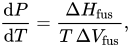
where ΔHfus is the heat of fusion which is always positive, and ΔVfus is the volume change for fusion. For most substances ΔVfus is positive so that the slope is positive. However for water and other exceptions, ΔVfus is negative so that the slope is negative.
Other thermodynamic properties[edit source]
In addition to temperature and pressure, other thermodynamic properties may be graphed in phase diagrams. Examples of such thermodynamic properties include specific volume, specific enthalpy, or specific entropy. For example, single-component graphs of temperature vs. specific entropy (T vs. s) for water/steam or for a refrigerant are commonly used to illustrate thermodynamic cycles such as a Carnot cycle, Rankine cycle, or vapor-compression refrigeration cycle.
Any two thermodynamic quantities may be shown on the horizontal and vertical axes of a two-dimensional diagram. Additional thermodynamic quantities may each be illustrated in increments as a series of lines – curved, straight, or a combination of curved and straight. Each of these iso-lines represents the thermodynamic quantity at a certain constant value.

| enthalpy–entropy (h–s) diagram for steam | pressure–enthalpy (p–h) diagram for steam | temperature–entropy (T–s) diagram for steam |


3-dimensional diagrams[edit source]

It is possible to envision three-dimensional (3D) graphs showing three thermodynamic quantities.[11][12] For example, for a single component, a 3D Cartesian coordinate type graph can show temperature (T) on one axis, pressure (p) on a second axis, and specific volume (v) on a third. Such a 3D graph is sometimes called a p–v–T diagram. The equilibrium conditions are shown as curves on a curved surface in 3D with areas for solid, liquid, and vapor phases and areas where solid and liquid, solid and vapor, or liquid and vapor coexist in equilibrium. A line on the surface called a triple line is where solid, liquid and vapor can all coexist in equilibrium. The critical point remains a point on the surface even on a 3D phase diagram.

An orthographic projection of the 3D p–v–T graph showing pressure and temperature as the vertical and horizontal axes collapses the 3D plot into the standard 2D pressure–temperature diagram. When this is done, the solid–vapor, solid–liquid, and liquid–vapor surfaces collapse into three corresponding curved lines meeting at the triple point, which is the collapsed orthographic projection of the triple line.
Binary mixtures[edit source]
Other much more complex types of phase diagrams can be constructed, particularly when more than one pure component is present. In that case, concentration becomes an important variable. Phase diagrams with more than two dimensions can be constructed that show the effect of more than two variables on the phase of a substance. Phase diagrams can use other variables in addition to or in place of temperature, pressure and composition, for example the strength of an applied electrical or magnetic field, and they can also involve substances that take on more than just three states of matter.

One type of phase diagram plots temperature against the relative concentrations of two substances in a binary mixture called a binary phase diagram, as shown at right. Such a mixture can be either a solid solution, eutectic or peritectic, among others. These two types of mixtures result in very different graphs. Another type of binary phase diagram is a boiling-point diagram for a mixture of two components, i. e. chemical compounds. For two particular volatile components at a certain pressure such as atmospheric pressure, a boiling-point diagram shows what vapor (gas) compositions are in equilibrium with given liquid compositions depending on temperature. In a typical binary boiling-point diagram, temperature is plotted on a vertical axis and mixture composition on a horizontal axis.


A two component diagram with components A and B in an "ideal" solution is shown. The construction of a liquid vapor phase diagram assumes an ideal liquid solution obeying Raoult's law and an ideal gas mixture obeying Dalton's law of partial pressure. A tie line from the liquid to the gas at constant pressure would indicate the two compositions of the liquid and gas respectively.[13]
A simple example diagram with hypothetical components 1 and 2 in a non-azeotropic mixture is shown at right. The fact that there are two separate curved lines joining the boiling points of the pure components means that the vapor composition is usually not the same as the liquid composition the vapor is in equilibrium with. See Vapor–liquid equilibrium for more information.
In addition to the above-mentioned types of phase diagrams, there are many other possible combinations. Some of the major features of phase diagrams include congruent points, where a solid phase transforms directly into a liquid. There is also the peritectoid, a point where two solid phases combine into one solid phase during cooling. The inverse of this, when one solid phase transforms into two solid phases during cooling, is called the eutectoid.
A complex phase diagram of great technological importance is that of the iron–carbon system for less than 7% carbon (see steel).
The x-axis of such a diagram represents the concentration variable of the mixture. As the mixtures are typically far from dilute and their density as a function of temperature is usually unknown, the preferred concentration measure is mole fraction. A volume-based measure like molarity would be inadvisable.
Ternary phase diagrams[edit source]
A system with three components is called a ternary system. At constant pressure the maximum number of independent variables is three – the temperature and two concentration values. For a representation of ternary equilibria a three-dimensional phase diagram is required. Often such a diagram is drawn with the composition as a horizontal plane and the temperature on an axis perpendicular to this plane. To represent composition in a ternary system an equilateral triangle is used, called Gibbs triangle (see also Ternary plot).


The temperature scale is plotted on the axis perpendicular to the composition triangle. Thus, the space model of a ternary phase diagram is a right-triangular prism. The prism sides represent corresponding binary systems A-B, B-C, A-C.
However, the most common methods to present phase equilibria in a ternary system are the following: 1) projections on the concentration triangle ABC of the liquidus, solidus, solvus surfaces; 2) isothermal sections; 3) vertical sections.[14]
Crystals[edit source]
Polymorphic and polyamorphic substances have multiple crystal or amorphous phases, which can be graphed in a similar fashion to solid, liquid, and gas phases.

Mesophases[edit source]
Some organic materials pass through intermediate states between solid and liquid; these states are called mesophases. Attention has been directed to mesophases because they enable display devices and have become commercially important through the so-called liquid-crystal technology. Phase diagrams are used to describe the occurrence of mesophases.[16]
Earth[edit source]
The Earth formed from the same cloud of matter that formed the Sun, but the planets acquired different compositions during the formation and evolution of the solar system. In turn, the natural history of the Earth caused parts of this planet to have differing concentrations of the elements.
The mass of the Earth is approximately 5.97×1024 kg. In bulk, by mass, it is composed mostly of iron (32.1%), oxygen (30.1%), silicon (15.1%), magnesium (13.9%), sulfur (2.9%), nickel (1.8%), calcium (1.5%), and aluminium (1.4%); with the remaining 1.2% consisting of trace amounts of other elements.[12]
The bulk composition of the Earth by elemental-mass is roughly similar to the gross composition of the solar system, with the major differences being that Earth is missing a great deal of the volatile elements hydrogen, helium, neon, and nitrogen, as well as carbon which has been lost as volatile hydrocarbons. The remaining elemental composition is roughly typical of the "rocky" inner planets, which formed in the thermal zone where solar heat drove volatile compounds into space. The Earth retains oxygen as the second-largest component of its mass (and largest atomic-fraction), mainly from this element being retained in silicate minerals which have a very high melting point and low vapor pressure.
Crust[edit source]

The mass-abundance of the nine most abundant elements in the Earth's crust is approximately: oxygen 46%, silicon 28%, aluminium 8.3%, iron 5.6%, calcium 4.2%, sodium 2.5%, magnesium 2.4%, potassium 2.0%, and titanium 0.61%. Other elements occur at less than 0.15%. For a complete list, see abundance of elements in Earth's crust.
The graph at right illustrates the relative atomic-abundance of the chemical elements in Earth's upper continental crust—the part that is relatively accessible for measurements and estimation.
Many of the elements shown in the graph are classified into (partially overlapping) categories:
- rock-forming elements (major elements in green field, and minor elements in light green field);
- rare earth elements (lanthanides (La–Lu), Sc, and Y; labeled in blue);
- major industrial metals (global production >~3×10⁷ kg/year; labeled in red);
- precious metals (labeled in purple);
- the nine rarest "metals" – the six platinum group elements plus Au, Re, and Te (a metalloid) – in the yellow field. These are rare in the crust from being soluble in iron and thus concentrated in the Earth's core. Tellurium is the single most depleted element in the silicate Earth relative to cosmic abundance, because in addition to being concentrated as dense chalcogenides in the core it was severely depleted by preaccretional sorting in the nebula as volatile hydrogen telluride.[14]
Note that there are two breaks where the unstable (radioactive) elements technetium (atomic number 43) and promethium (atomic number 61) would be. These elements are surrounded by stable elements, yet their most stable isotopes have relatively short half lives (~4 million years and ~18 years respectively). These are thus extremely rare, since any primordial initial fractions of these in pre-Solar System materials have long since decayed. These two elements are now only produced naturally through the spontaneous fission of very heavy radioactive elements (for example, uranium, thorium, or the trace amounts of plutonium that exist in uranium ores), or by the interaction of certain other elements with cosmic rays. Both technetium and promethium have been identified spectroscopically in the atmospheres of stars, where they are produced by ongoing nucleosynthetic processes.
There are also breaks in the abundance graph where the six noble gases would be, since they are not chemically bound in the Earth's crust, and they are only generated in the crust by decay chains from radioactive elements, and are therefore extremely rare there.
The eight naturally occurring very rare, highly radioactive elements (polonium, astatine, francium, radium, actinium, protactinium, neptunium, and plutonium) are not included, since any of these elements that were present at the formation of the Earth have decayed away eons ago, and their quantity today is negligible and is only produced from the radioactive decay of uranium and thorium.
Oxygen and silicon are notably the most common elements in the crust. On Earth and in rocky planets in general, silicon and oxygen are far more common than their cosmic abundance. The reason is that they combine with each other to form silicate minerals.[14] Other cosmically-common elements such as hydrogen, carbon and nitrogen form volatile compounds such as ammonia and methane that easily boil away into space from the heat of planetary formation and/or the Sun's light.
The component ions in a salt compound can be either inorganic, such as chloride (Cl−), or organic, such as acetate (CH
3CO−
2). Each ion can be either monatomic, such as fluoride (F−), or polyatomic, such as sulfate (SO2−
4).
Types of salt[edit source]
Salts can be classified in a variety of ways. Salts that produce hydroxide ions when dissolved in water are called alkali salts and salts that produce hydrogen ions when dissolved in water are called acid salts. Neutral salts are those salts that are neither acidic nor basic. Zwitterions contain an anionic and a cationic centre in the same molecule, but are not considered salts. Examples of zwitterions are amino acids, many metabolites, peptides, and proteins.[2]
Properties[edit source]

Color[edit source]
Solid salts tend to be transparent as illustrated by sodium chloride. In many cases, the apparent opacity or transparency are only related to the difference in size of the individual monocrystals. Since light reflects from the grain boundaries (boundaries between crystallites), larger crystals tend to be transparent, while the polycrystalline aggregates look like opaque powders or masses.
Salts exist in many different colors, which arise either from the anions, cations or solvates. For example:
- sodium chromate is yellow by virtue of the chromate ion
- potassium dichromate is orange by virtue of the dichromate ion
- cobalt nitrate is red owing to the chromophore of hydrated cobalt(II) ([Co(H2O)6]2+).
- copper sulfate is blue because of the copper(II) chromophore
- potassium permanganate has the violet color of permanganate anion.
- nickel chloride is typically green because of the hydrated nickel(II) chloride [NiCl2(H2O)4]
- sodium chloride, magnesium sulfate heptahydrate are colorless or white because the constituent cations and anions do not absorb in the visible part of the spectrum
Few minerals are salts because they would be solubilized by water.[dubious ][clarification needed] Similarly inorganic pigments tend not to be salts, because insolubility is required for fastness. Some organic dyes are salts, but they are virtually insoluble in water.
Taste[edit source]
Different salts can elicit all five basic tastes, e.g., salty (sodium chloride), sweet (lead diacetate, which will cause lead poisoning if ingested), sour (potassium bitartrate), bitter (magnesium sulfate), and umami or savory (monosodium glutamate).
Odor[edit source]
Salts of strong acids and strong bases ("strong salts") are non-volatile and often odorless, whereas salts of either weak acids or weak bases ("weak salts") may smell like the conjugate acid (e.g., acetates like acetic acid (vinegar) and cyanides like hydrogen cyanide (almonds)) or the conjugate base (e.g., ammonium salts like ammonia) of the component ions. That slow, partial decomposition is usually accelerated by the presence of water, since hydrolysis is the other half of the reversible reaction equation of formation of weak salts.
Solubility[edit source]
Many ionic compounds exhibit significant solubility in water or other polar solvents. Unlike molecular compounds, salts dissociate in solution into anionic and cationic components. The lattice energy, the cohesive forces between these ions within a solid, determines the solubility. The solubility is dependent on how well each ion interacts with the solvent, so certain patterns become apparent. For example, salts of sodium, potassium and ammonium are usually soluble in water. Notable exceptions include ammonium hexachloroplatinate and potassium cobaltinitrite. Most nitrates and many sulfates are water-soluble. Exceptions include barium sulfate, calcium sulfate (sparingly soluble), and lead(II) sulfate, where the 2+/2− pairing leads to high lattice energies. For similar reasons, most metal carbonates are not soluble in water. Some soluble carbonate salts are: sodium carbonate, potassium carbonate and ammonium carbonate.
Conductivity[edit source]

Salts are characteristically insulators. Molten salts or solutions of salts conduct electricity. For this reason, liquified (molten) salts and solutions containing dissolved salts (e.g., sodium chloride in water) can be used as electrolytes.
Melting point[edit source]
Salts characteristically have high melting points. For example, sodium chloride melts at 801 °C. Some salts with low lattice energies are liquid at or near room temperature. These include molten salts, which are usually mixtures of salts, and ionic liquids, which usually contain organic cations. These liquids exhibit unusual properties as solvents.
Nomenclature[edit source]
The name of a salt starts with the name of the cation (e.g., sodium or ammonium) followed by the name of the anion (e.g., chloride or acetate). Salts are often referred to only by the name of the cation (e.g., sodium salt or ammonium salt) or by the name of the anion (e.g., chloride salt or acetate salt).
Common salt-forming cations include:
- Ammonium NH+
4 - Calcium Ca2+
- Iron Fe2+
and Fe3+ - Magnesium Mg2+
- Potassium K+
- Pyridinium C
5H
5NH+ - Quaternary ammonium NR+
4, R being an alkyl group or an aryl group - Sodium Na+
- Copper Cu2+
Common salt-forming anions (parent acids in parentheses where available) include:
- Acetate CH
3COO−
(acetic acid) - Carbonate CO2−
3 (carbonic acid) - Chloride Cl−
(hydrochloric acid) - Citrate HOC(COO−
)(CH
2COO−
)
2 (citric acid) - Cyanide C≡N−
(hydrocyanic acid) - Fluoride F−
(hydrofluoric acid) - Nitrate NO−
3 (nitric acid) - Nitrite NO−
2 (nitrous acid) - Oxide O2−
(water) - Phosphate PO3−
4 (phosphoric acid) - Sulfate SO2−
4 (sulfuric acid)
Salts with varying number of hydrogen atoms replaced by cations as compared to their parent acid can be referred to as monobasic, dibasic, or tribasic, identifying that one, two, or three hydrogen atoms have been replaced; polybasic salts refer to those with more than one hydrogen atom replaced. Examples include:
- Sodium phosphate monobasic (NaH2PO4)
- Sodium phosphate dibasic (Na2HPO4)
- Sodium phosphate tribasic (Na3PO4)
Formation[edit source]
_sulfate.jpg)
Salts are formed by a chemical reaction between:
- A base and an acid, e.g., NH3 + HCl → NH4Cl
- A metal and an acid, e.g., Mg + H2SO4 → MgSO4 + H2
- A metal and a non-metal, e.g., Ca + Cl2 → CaCl2
- A base and an acid anhydride, e.g., 2 NaOH + Cl2O → 2 NaClO + H2O
- An acid and a base anhydride, e.g., 2 HNO3 + Na2O → 2 NaNO3 + H2O
- In the salt metathesis reaction where two different salts are mixed in water, their ions recombine, and the new salt is insoluble and precipitates. For example:
- Pb(NO3)2 + Na2SO4 → PbSO4↓ + 2 NaNO3
Strong salt[edit source]
Strong salts or strong electrolyte salts are chemical salts composed of strong electrolytes. These ionic compounds dissociate completely in water. They are generally odorless and nonvolatile.
Strong salts start with Na__, K__, NH4__, or they end with __NO3, __ClO4, or __CH3COO. Most group 1 and 2 metals form strong salts. Strong salts are especially useful when creating conductive compounds as their constituent ions allow for greater conductivity.[4]
Weak salt[edit source]
Weak salts or "weak electrolyte salts" are, as the name suggests, composed of weak electrolytes. They are generally more volatile than strong salts. They may be similar in odor to the acid or base they are derived from. For example, sodium acetate, CH3COONa, smells similar to acetic acid CH3COOH.
Iodised salt


Iodised salt (also spelled iodized salt) is table salt mixed with a minute amount of various salts of the element iodine. The ingestion of iodine prevents iodine deficiency. Worldwide, iodine deficiency affects about two billion people and is the leading preventable cause of intellectual and developmental disabilities.[1][2] Deficiency also causes thyroid gland problems, including endemic goitre. In many countries, iodine deficiency is a major public health problem that can be cheaply addressed by purposely adding small amounts of iodine to the sodium chloride salt.
Iodine is a micronutrient and dietary mineral that is naturally present in the food supply in some regions, especially near sea coasts but is generally quite rare in the Earth's crust since iodine is a so-called heavy element, and abundance of chemical elements generally declines with greater atomic mass. Where natural levels of iodine in the soil are low and the iodine is not taken up by vegetables, iodine added to salt provides the small but essential amount of iodine needed by humans.
An opened package of table salt with iodide may rapidly lose its iodine content in high temperature and high relative humidity conditions through the process of oxidation and iodine sublimation.[3]
Chemistry, biochemistry and nutritional aspects[edit source]

Four inorganic compounds are used as iodide sources, depending on the producer: potassium iodate, potassium iodide, sodium iodate, and sodium iodide. Any of these compounds supplies the body with its iodine required for the biosynthesis of thyroxine (T4) and triiodothyronine (T3) hormones by the thyroid gland. Animals also benefit from iodine supplements, and the hydrogen iodide derivative of ethylenediamine is the main supplement to livestock feed.[4]
Salt is an effective vehicle for distributing iodine to the public because it does not spoil and is consumed in more predictable amounts than most other commodities.[citation needed] For example, the concentration of iodine in salt has gradually increased in Switzerland: 3.75 mg/kg in 1952, 7.5 mg/kg in 1962, 15 mg/kg in 1980, 20 mg/kg in 1998, and 25 mg/kg in 2014.[5] These increases were found to improve iodine status in the general Swiss population.[6]
Salt that is iodized may slowly lose its iodine content by exposure to excess air over long periods.[7]
And the finding out finds out
The interesting thing is that an atom with completely filled shells is very stable (all the available states in each group are occupied by electrons). On the other hand, an atom with its outermost shell only partially filled has a strong tendency to steal, lose, or share electrons from other atoms in order to fill its outermost shell and become stable. Such atoms are therefore chemically reactive. A well-known salt is sodium chloride (table salt), so let's use it as an example. A single neutral sodium atom has eleven electrons. Ten of these electrons fill states such that they form complete shells. The eleventh electron of sodium, however, is alone in the outermost, partially filled shell. Electrons are bound in atoms because their negative electric charge experiences electric attraction to the positive charge of the atom's nucleus. But for sodium, the negatively-charged electrons in the inner, completed shells do a good job of blocking, or screening, the attractive force of the nucleus on the eleventh electron. As a result, the eleventh electron of sodium is loosely bound to the atom and is ripe for being stolen by a more powerful atom.
In contrast, chlorine (17 electrons) has all of its shells filled with electrons except for its outermost shell which is one electron short of being complete. There is a very strong attraction by the chlorine atom on an outside electron which is needed to complete its shell. Sodium and chlorine are therefore a perfect match. Sodium has one electron it is not holding onto very strongly, and chlorine is looking for one more electron to steal to fill its shell. As a result, a pure sample of sodium reacts strongly with a pure sample of chlorine and the end product is table salt. Each chlorine atom steals an electron from the sodium atom. Each sodium atom now has 11 positive protons and 10 negative electrons, for a net charge of +1. Each chlorine atom now has 17 positive protons and 18 negative electrons for a net charge of -1. The atoms have therefore been ionized by the reaction that forms solid table salt, all without the presence of water. Both the sodium and the chlorine ions now have completely filled shells and are therefore stable. This is a good example of an atom that naturally has an unequal number of electron and protons.
The net positive sodium ion is now attracted to the net negative chlorine ion and this attraction forms what we call an "ionic bond". But, in reality, we don't have just one sodium ion sticking to ion chlorine ion. Instead, a lattice of many sodium ions ionically bonds to a lattice of chlorine ions, and we end up with a crystalline solid. Each sodium ion in the crystalline lattice of table salt is bound to the 6 nearest chlorine ions, and the same goes for each chlorine ion. The atoms in table salt are therefore already in the ionized state.
Adding water does not ionize the atoms in salt, because they are already ionized. Instead, the water molecules stick to the already formed ions in the salt. The textbook titled Cell and Molecular Biology: Concepts and Experiments by Gerald Karp states, "A crystal of table salt is held together by an electrostatic attraction between positively charged Na+ and negatively charged Cl– ions. This type of attraction between fully charged components is called an ionic bond (or a salt bridge). Ionic bonds within a salt crystal may be quite strong. However, if a crystal of salt is dissolved in water, each of the individual ions becomes surrounded by water molecules, which inhibit oppositely charged ions from approaching one another closely enough to form ionic bonds." Each water molecule has a permanent dipole, meaning that one end is always slightly positively charged and the other end is always slightly negatively charged. The charged ends of the water molecules are so strongly attracted to the charged ions in the salt crystal that the water destroys the solid lattice structure of the salt and each sodium and chlorine ion becomes surrounded by a layer of sticky water molecules. In chemistry, we say the salt has been dissolved by the water. It's like a rock band exiting the limousine into a crowd of fans and becoming separated as each band member gets surrounded by his own circle of fans. If the atoms in solid salt were not ionized to begin with, the water would not do such a good job dissolving the salt.


Comments
Post a Comment
Have something to say? Say it See it Feel it Live it then take It apart until you know what It is and As you were before you were born, feel the sound of it rattling around in the outbox smell the sight of it as the juices in your brain bag are fed little light waves of electric combinatory discombinatory salty sea solution sliding stealthily supplying the juice for the other end of the switch turned on by the turn on that turns on the on like one is when one is on and one is when one is idling on as the slumber soothes silky roads of well traversed travelers traipsing trails of tuned toned teeny tiny twirls of primes pumping nines into sixes and threes like humming honey bees evens evening out the odds as the unknown unknowns puddle sing a shiny bling and bring the ear funnel Z as close as eyeball close can see...z.z..z...